
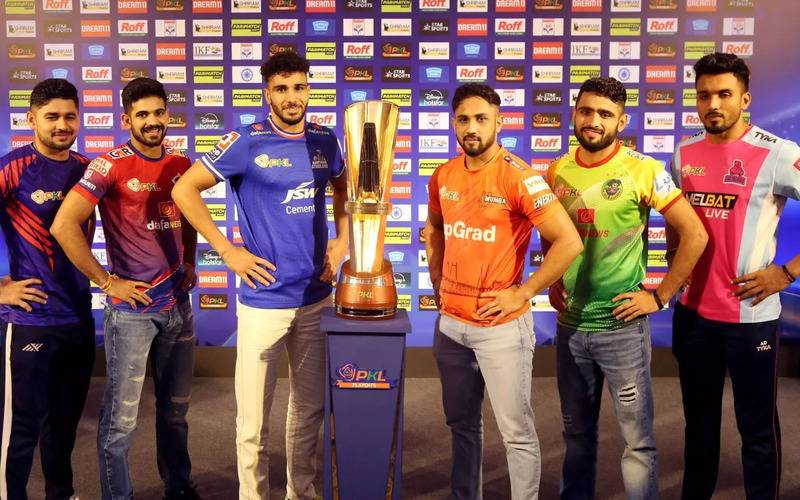
Winning in the Pro Kabaddi League (PKL) is never about just one star player. A team can have a legendary raider or a famous defender, but success comes when every player works together. The best teams plan carefully, balance raiders and defenders, stay fit, think fast under pressure, and communicate clearly on the mat.
A strong PKL team is like a well-oiled machine. Raiders, defenders, and all-rounders support each other, cover weaknesses, and adapt to challenges during a match. Star players can shine, but a team wins championships because of strategy, teamwork, fitness, and mental toughness.
Looking at how top teams like Patna Pirates, U Mumba, and Bengal Warriors have built their squads shows that planning, coordination, and smart player selection matter more than individual talent. Aspiring players, coaches, and fans can learn a lot by studying what makes a winning team combination, from fitness routines to tactical choices.
In this article, we will explore what makes the perfect PKL team, how teams balance raiders and defenders, the role of all-rounders, how auctions shape squads, and how mental strength and teamwork decide champions.
Balance Between Raiders and Defenders
The foundation of a strong PKL team is the right balance between raiders and defenders. Raiders score points, but reliable defenders keep the team in the game.
A team stacked only with defenders struggles to keep up with fast-scoring opponents.
A perfect combination usually includes two or three star raiders, strong left and right corner defenders, skilled all-rounders, and reliable centers.
This balance ensures that the team stays competitive whether attacking or defending. Teams like Patna Pirates have shown how the right mix of raiders and defenders can win championships.
Role of All-Rounders
All-rounders are the unsung heroes of PKL. They switch between raiding and defending as needed. A strong all-rounder fills gaps when a star player is stopped or tired.
Players like Rakesh Kumar and Monu Goyat have shown that versatile all-rounders help teams handle unexpected situations.
Their presence reduces pressure on a single player and makes the team less predictable and more adaptable during high-pressure moments.
Strategic Player Selection and Auctions
The PKL auction system has changed how teams form squads. Successful franchises plan their budgets to secure the right mix of stars, young talent, and experienced players. Coaches study player stats, form, fitness, and positions before bidding.
Big-name raiders attract attention, but teams that only focus on expensive players often fail.
The ideal combination blends veterans with experience, young energetic players, and role-specific athletes to strengthen weak areas.
U Mumba has repeatedly shown how strategic planning in auctions creates winning squads.
Fitness and Endurance
A perfect PKL team depends on physical fitness and stamina. Raiders need explosive power and agility, while defenders require strength and endurance for repeated tackles.
All players must handle back-to-back matches, fast raids, and quick defensive transitions.
Teams invest in personal trainers, physiotherapists, and nutritionists to maintain peak fitness. This helps players recover quickly, stay consistent, and avoid injuries, which is critical for team success.
Mental Strength and Pressure Management
Mental toughness is as important as physical skill. PKL matches are fast and intense. Players must make split-second decisions under pressure.
Teams with calm leaders and aggressive young players manage stressful moments better, like final minutes in tight games.
Captains and coaches guide players, boost confidence, and keep focus. Teams that train both physically and mentally outperform squads that rely only on talent.
Communication and Coordination
Seamless communication and coordination are vital for winning. Raiders and defenders must predict each other’s moves and execute strategies together. Miscommunication can lead to missed tackles, lost points, or penalties.
Teams practice defensive formations and raiding simulations to improve teamwork. The best squads cover for each other instinctively and adapt to changing match conditions.
Adapting to Opponents
A perfect team is flexible. Coaches study opponent formations, raiding styles, and defense patterns to change tactics mid-game.
Teams that can rotate raiders and modify defense gain an edge even if a star player is neutralized.
Depth and versatility are crucial. Teams like Bengal Warriors show that adaptable squads often win matches that seem impossible.
Examples of Successful Combinations
PKL history provides clear lessons:
U Mumba: Balanced raiders and defenders, excellent coordination, and tactical adaptability led to multiple championships.
Patna Pirates: Star raiders like Pardeep Narwal combined with experienced defenders and all-rounders for a championship-winning squad.
Bengal Warriors: Focused on youth talent, flexibility, and mental toughness alongside veterans to stay competitive.
These examples show that planning, balance, and adaptability matter more than just individual talent.
Lessons for Aspiring Teams and Coaches
Balance is Key: Raiders, defenders, and all-rounders must complement each other.
Invest in Fitness: Strength, agility, and endurance maintain performance.
Prioritize Mental Toughness: Calm, focused players handle pressure better.
Build Depth: A versatile squad handles injuries or focused opponents.
Adaptability Wins Matches: Teams that adjust tactics mid-game perform better than rigid lineups.
These lessons show that building a PKL team is a strategic, multidimensional process, not just collecting stars.
Conclusion
Creating a perfect PKL team combination requires talent, fitness, mental strength, adaptability, and teamwork. Star players can influence matches, but consistent success comes from a cohesive, versatile squad.
Teams that invest in strategy, training, mental preparation, and team chemistry consistently outperform teams relying on individual brilliance.
Aspiring coaches and players can learn that success comes from planning, coordination, and collective strength.
Ultimately, a perfect PKL team is not just about big names. It is about every player complementing others, adapting to challenges, and executing strategy under pressure, making championships achievable.

“Rohit is a seasoned sports journalist with over 5 years of experience specializing in Indian sports. He has built a reputation for his deep-dive analysis of the Pro Kabaddi League (PKL) and domestic Indian Cricket. From tracking player auctions to breaking down match-winning strategies, Rohit provides fans with expert insights grounded in years of on-ground reporting and statistical analysis.