
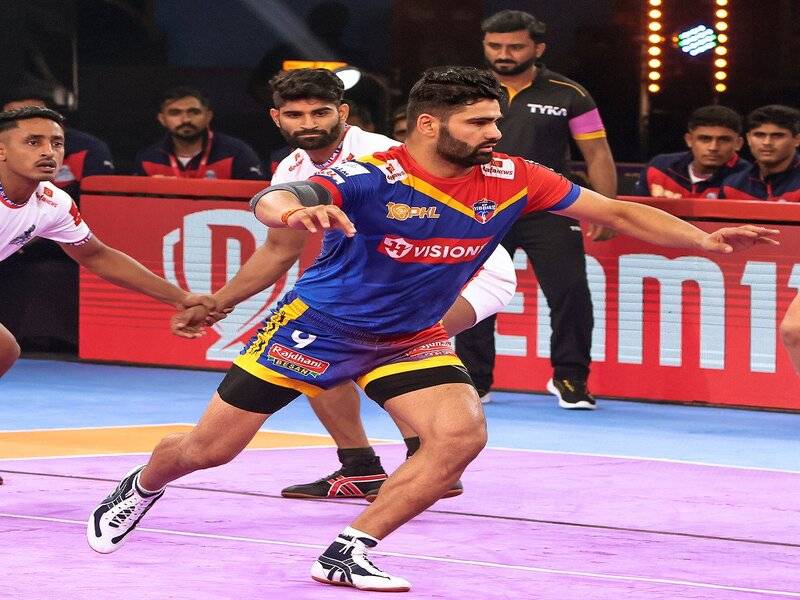
The Pro Kabaddi League has completely changed how kabaddi is played and watched. In just a few years it has become one of the biggest mat kabaddi leagues in the world.
PKL matches are fast, stadiums are full and players are under constant pressure to perform. Because of this, fans often believe one simple thing. A team with star players should always win.
But PKL proves again and again that this belief is wrong.
Every season teams with famous raiders and defenders fail to perform as expected.
Some look strong at the start and then fade away. Others never find rhythm at all. On paper they look unbeatable but on the mat they struggle.
This makes fans wonder why some PKL teams fail even with star players.
You will get the clear answer when you watch PKL closely. Kabaddi is not won by names. It is won by how well players think, move, and react together when pressure rises.
Team Chemistry Matters More Than Fame
Kabaddi is played in seconds. There is no time to think too much. A raider depends on defenders holding their shape. Defenders depend on covers and corners reacting together. If one player hesitates even slightly the entire move breaks.
In PKL matches points are often lost because of small moments. A late cover, a broken chain tackle, and confusion during a do-or-die raid. These mistakes do not happen because players are not skilled. They happen because players are not fully connected as a unit.
Team chemistry cannot be created overnight. It grows through time, trust, and shared experience. When teams sign many star players at once this connection often takes longer to develop. Until then, the team suffers on the mat.
Too Much Dependence on Star Players
Many PKL teams make one big mistake. They depend only on one star player. When that player keeps scoring the team looks relaxed and confident. The moment he is stopped the team loses control and starts making mistakes.
Other teams understand this very clearly. They do not panic. They only focus on stopping that one raider. They block his favorite moves and force him into tough raids again and again. After some time the star player gets tired and frustrated.
When this happens the rest of the team is not ready. Other raiders do not get chances. Defenders feel extra pressure. Slowly the team breaks apart.
Strong PKL teams do not play like this. They share the work. If one raider is stopped another raider steps up. All-rounders help wherever needed. Defenders support each other instead of blaming one player. Because of this, no single player carries the whole load and the team stays calm even in tough moments.
Strategy Can Decide the Match
In PKL, talent alone is not enough. Many matches are lost because teams make simple wrong decisions.
Sometimes a team sends the wrong raider at the wrong time. Sometimes a defender is taken out when he should stay on the mat. During bonus raids some teams panic and give away easy points. These small mistakes quickly change the mood of the match.
Good teams understand what is happening on the mat. If the opponent looks tired they attack more. If they are leading, they play calmly and slow the game down. Teams that do not understand this keep doing the same thing again and again until the match goes out of their hands.
Fatigue and Mental Pressure Change Everything
A PKL season is very tiring. Matches are played close to each other. Travel does not stop and training continues every day. Star players usually play longer minutes, and slowly their energy drops.
When players are tired their reactions become slow. Slow reactions mean missed tackles and rushed raids. This has nothing to do with talent. It happens because the body needs rest.
Mental pressure makes it worse. Star players are always under the spotlight. One bad raid and everyone notices. If the team does not support the player, his confidence falls. In close matches this pressure often decides who wins and who loses.
Injuries and Squad Depth Expose Weaknesses
Injuries are common in kabaddi. When an important player gets injured the team is tested.
Strong teams handle this well. Backup players know what to do and step in without fear. Teams that depend only on big names struggle immediately. New players look confused and combinations stop working.
PKL has shown many times that teams with good backups survive long seasons better than teams built only around star players.
Coaching and Leadership Shape Results
A good coach makes things simple for players. He tells them their role and gives them confidence. A good captain keeps the team calm when things go wrong.
When leadership is weak players look lost. Raiders are sent again and again even when they are tired. Defenders stop working together. Mistakes increase and confidence drops. Even star players fail when there is no clear direction.
What PKL History Keeps Showing Us
Every PKL season shows the same story. Teams full of famous players finish in the middle of the table. Teams depending on one raider collapse when that raider is stopped. Teams that cannot change their plan lose matches they were winning.
These things happen again and again. They are not lucky or unlucky moments. They are clear lessons from the league.
Lessons for Teams and Players
Kabaddi is not about one hero. Every player must help the team. Fitness is important. Mental strength is important. Good leadership is important.
Star players are useful only when the whole team works together.
Conclusion
The Pro Kabaddi League teaches one clear lesson. Star players alone do not win matches. Teams win when players understand each other and support each other.
For teams and young players the message is simple. Play together. Stay calm. Think smart. Teams that do this again and again are the ones that succeed in PKL.

“Rohit is a seasoned sports journalist with over 5 years of experience specializing in Indian sports. He has built a reputation for his deep-dive analysis of the Pro Kabaddi League (PKL) and domestic Indian Cricket. From tracking player auctions to breaking down match-winning strategies, Rohit provides fans with expert insights grounded in years of on-ground reporting and statistical analysis.