
Kabaddi fans often notice one common pattern that raiders peak early and retire earlier, while defenders play for many more years.
Many legendary defenders stay active well into their late 30s, and some even continue beyond that.
But raiders usually face a shorter career span. This difference is not accidental. It is linked to the physical demands, mental pressure, injury risk, and long-term fitness load of both roles.
Here is the full inside story of why defenders last longer than raiders in professional kabaddi.
The Physical Demands Are Completely Different
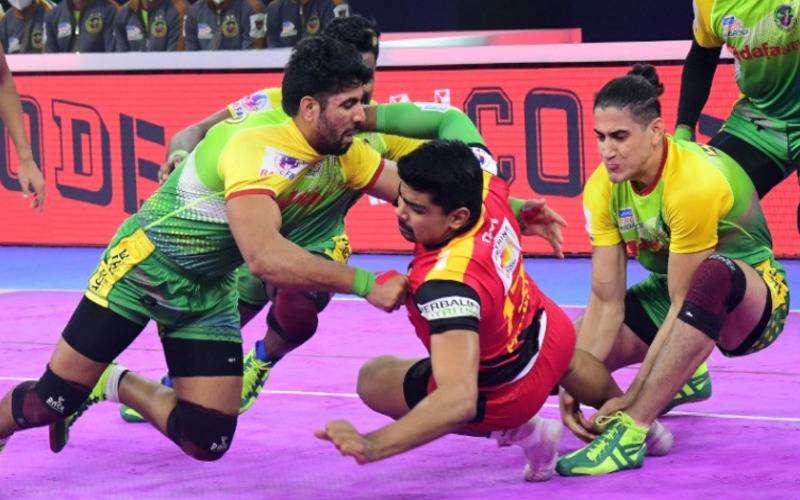
A raider enters the opponent’s half alone. Seven defenders wait to stop him, and every raid is a combination of sprinting, dodging, jumping, twisting, and escaping powerful tackles.
decrease This level of explosive movement places huge pressure on the raider’s joints, hamstrings, shoulders, and lower back.
Defenders, on the other hand, focus more on strength, timing, and coordination than explosive movements.
Their actions are powerful but controlled. They do not need to take repeated high-speed risks like raiders.
Coaches explain that raiders undergo far more “impact load” per match. This kind of heavy physical stress that shortens athletic careers.
Raiders Face Higher Injury Risk
Most long-term kabaddi injuries come from raiding:
- Ankle twists during sudden direction changes
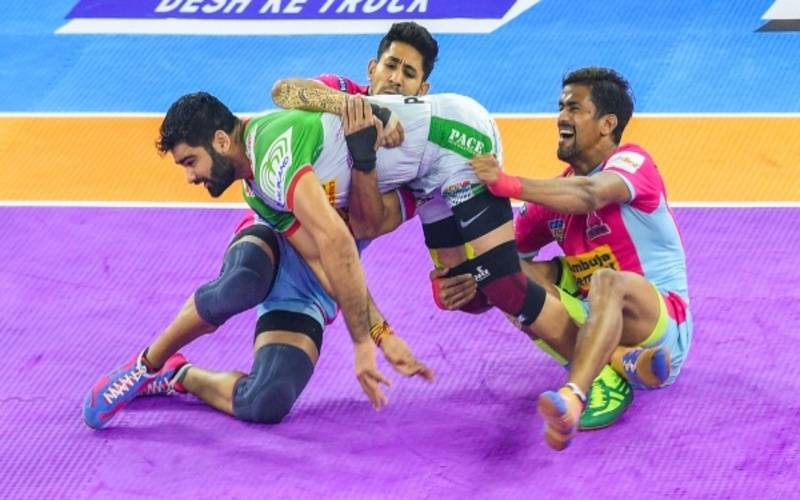
- Shoulder injuries from chain or thigh-hold tackles
- Knee stress from jumping kicks and attempts to escape
- Hamstring injuries from repeated sprinting
A single bad landing can heavily affect a raider’s mobility. Because raiders need speed, reflexes, and light footwork, even a small injury slows them down.
Defenders can adjust their playing style after injury more easily because their role depends more on strength and technique, not pure speed.
This is why many raiders’ peak lasts only 4–6 years, whereas defenders continue performing even after injuries.
Defenders Rely More on Experience Than Speed
One of the biggest factors behind defenders longer careers is that their success depends heavily on timing, judgement, angle awareness, and positioning.
A senior defender reads a raider’s body language better, predicts movement faster, and anticipates strategies more accurately.
These mental skills often get sharper with experience, allowing defenders to compensate even if their physical speed declines.
Raiders don’t enjoy this advantage. Their biggest weapons are speed, agility, and explosiveness. Unfortunately, all these naturally decrease with age.
This is why defenders sometimes even peak late in their careers, while raiders peak young.
Workload Difference: Raiders Do More High-Intensity Work
In every match, a raider may take 20–25 high-intensity raids. Each raid demands maximum energy, lung capacity, and fast recovery.
The body cannot sustain this high workload year after year.
Defenders, however, engage in short bursts of controlled energy. Their effort is intense but not repeated at the same frequency.
A defender doesn’t need to sprint 25 times per match. Their job is strategic and coordinated with the team, which reduces overall physical load.
Strength-based roles tend to last longer in almost every sport, and kabaddi is no different.
Mental Pressure Is Far Greater on Raiders
Raiders carry the scoring responsibility. A defender’s mistake costs a point, but a raider’s failure wastes an entire raid.
This constant pressure, match after match, takes a toll on confidence and mental stamina.
A raider must make split-second decisions while seven people try to catch him.
He cannot afford fear or hesitation. Over many seasons, this pressure builds up and affects performance.
Defenders share responsibility as a unit. They support each other, adjust formations, and work together, which reduces individual mental burden.
This balance allows defenders to stay mentally fresh for many more years.
Defenders Can Reinvent Their Playstyle Over Time
As defenders age, they can shift roles inside the defense:
- From corner to cover
- From aggressive tackler to strategist
- From lead stopper to support defender
- Their game adapts with experience.
Raiders do not get this flexibility. They cannot slow down their style or change their role because raiding depends heavily on youth, energy, and explosive power.
Once their speed drops, it becomes difficult to stay competitive at the highest level.
Why Teams Trust Veteran Defenders More
Franchises in PKL and national teams often choose senior defenders because they bring stability.
Their presence helps youngsters, improves defensive coordination, and reduces team errors.
A 35-year-old raider is rare.
A 35-year-old defender is common and sometimes even preferred.
This proves how much the sport values defensive experience.
Conclusion
Defenders last longer in kabaddi because their role depends on strength, strategy, timing, and experience. These qualities improve with age.
But on the other side, Raiders rely on speed and explosiveness, which naturally decline faster and carry a higher injury risk.
Over time, raiders face intense physical and mental pressure that shortens their careers, while defenders continue to grow smarter, stronger, and more stable.
Kabaddi is a sport of balance, and this balance shows clearly in career longevity. The body slows down, but the mind gets sharper, and that is why defenders remain the backbone of teams even after many years on the mat.

“Rohit is a seasoned sports journalist with over 5 years of experience specializing in Indian sports. He has built a reputation for his deep-dive analysis of the Pro Kabaddi League (PKL) and domestic Indian Cricket. From tracking player auctions to breaking down match-winning strategies, Rohit provides fans with expert insights grounded in years of on-ground reporting and statistical analysis.