

Kabaddi is a game of speed, strategy, and physical contact where every position carries its own challenges.
While all players need skill, stamina, and mental toughness, some roles demand much more than others.
The toughest positions in kabaddi are defined not just by the physical exertion required, but also by the pressure to make split-second decisions, the risk of injury, and the need to coordinate seamlessly with teammates.
Understanding these positions is essential for aspiring players and fans who want to appreciate the nuances of the sport.
Over the years, professional kabaddi has evolved into a high-intensity sport, making these roles even more demanding.
Left-Corner Defender
The left-corner defender is often regarded as the most challenging position in kabaddi. The role requires exceptional grip strength, anticipation, and tactical awareness.
Every raider in the game is aware of the left corner, and this defender must react within milliseconds to prevent points.
Mistakes can be costly, as raiders frequently aim to exploit weaknesses in this position.
Beyond physical strength, mental composure is vital. Players like Manjeet Chhillar exemplify how elite defenders combine explosive power with strategic intelligence. They must anticipate raider’s moves, adjust their stance, and communicate with fellow defenders under intense pressure.
The left-corner defender is expected to handle high-frequency attacks, making it a role that tests both mind and body continuously.
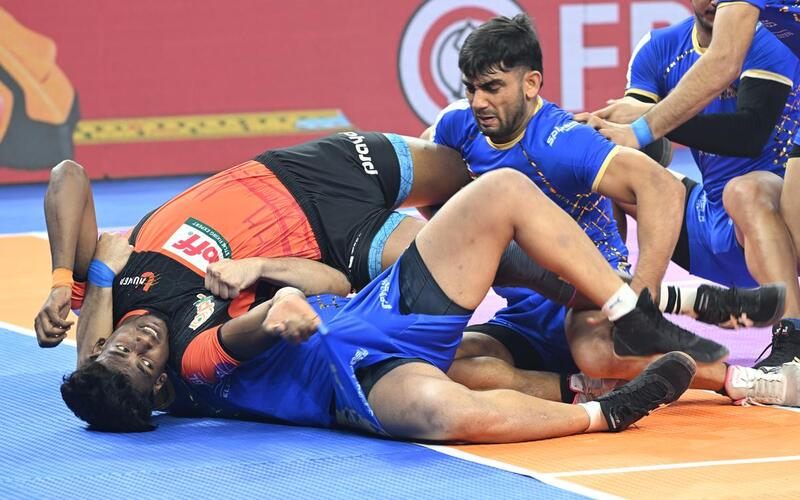
Raiders
Raiders carry the weight of scoring points for their team. Their role is physically demanding, requiring speed, agility, and explosive power.
However, the mental pressure is equally significant.
Raiders must constantly analyze the opposing defense, decide when to attempt risky raids, and recover quickly from failed attempts.
Elite raiders such as Pardeep Narwal and Rahul Chaudhari demonstrate how skill and strategy converge.
A successful raid involves timing, anticipation, and reading subtle cues from defenders.
Raiders face the unique challenge of maintaining composure even when the game is on the line. Fatigue and stress can impact reaction time, so raiders train rigorously to stay sharp during the last crucial minutes of a match.
Right-Corner Defender
While the right-corner defender is slightly less pressured than the left, the role is far from easy.
These defenders must combine raw strength with agility, coordinating with the center defenders to execute tackles successfully.
Anticipating raids and maintaining balance under aggressive attacks requires years of practice and physical conditioning.
Right-corner defenders often train to withstand sudden bursts of force, perfect their grip, and improve their footwork.
They are also responsible for identifying raider’s tendencies and reacting instantly.
Their contribution is critical because even a single lapse can allow a raider to score, making precision a key aspect of this position.
All-Rounders
All-rounders are perhaps the most versatile yet demanding players on the mat. They combine raiding and defensive responsibilities, which requires exceptional stamina, adaptability, and tactical intelligence.
All-rounders must switch roles instantly, from attacking opponents to defending teammates, without losing focus.
Training for all-rounders is intensive. They practice endurance drills, strength training, and reaction-based exercises to perform consistently under pressure.
Players like Rakesh Kumar exemplify this duality, demonstrating how adaptability and high fitness levels enable success in this demanding role.

Centers The Bakbone
Center defenders play a critical supporting role, coordinating tackles and assisting corner defenders.
While they may not face constant direct attacks, they are responsible for maintaining team structure and reacting to unpredictable raids.
Quick decision-making, situational awareness, and agility are essential.
Centers often cover large areas of the mat and must support both raiding and defensive actions.
They are required to anticipate plays, communicate with teammates effectively, and adjust their positioning continuously. While the position may appear less glamorous, it demands a combination of endurance, intelligence, and mental focus.
Why Some Positions Are Tougher Than Others
The toughness of a kabaddi position depends on several factors. Physical demands such as strength, speed, and agility vary across roles.
Mental pressure, including split-second decision-making and handling stress, plays a significant role in determining difficulty.
Positions like left-corner defender and raider carry higher tactical responsibilities, while all-rounders face the challenge of balancing both offense and defense.
Risk of injury is another factor, particularly for defenders who confront raiders repeatedly.
Modern professional kabaddi emphasises position-specific training, integrating fitness, mental conditioning, and tactical drills to prepare players for these challenges.
High-intensity exercises, recovery strategies, and scenario-based training ensure athletes are capable of performing under pressure.
Training and Preparation for Tough Positions
Professional players tailor their routines based on their positions. Corner defenders focus on grip strength, explosive power, and anticipation drills.
Raiders train for speed, agility, endurance, and rapid decision-making. All-rounders combine both raiding and defensive exercises, maintaining high stamina and versatility.
Centers work on communication, positioning, and reaction speed to support the team effectively.
Mental preparation is equally important. Players practice visualization, focus exercises, and scenario-based simulations to handle pressure during high-stakes matches.
These modern approaches reflect how kabaddi has evolved from a traditional game to a highly professional sport.
Lessons for Aspiring Players
Young kabaddi players can learn from observing the toughest positions. Choosing the right role according to one’s strengths is crucial.
Position-specific training, mental conditioning, and consistent practice are key for success.
Understanding how professionals handle pressure, maintain fitness, and execute strategies provides a roadmap for aspiring athletes.
Developing endurance, tactical awareness, and resilience can prepare players to tackle demanding roles effectively.
Conclusion
Not all kabaddi positions are created equal. While every role requires skill, endurance, and intelligence, positions like left-corner defender, raider, and all-rounder stand out as the toughest.
Players in these roles face continuous pressure, critical decision-making, and significant physical challenges.
Modern professional kabaddi emphasizes fitness, strategy, and mental preparation, enabling athletes to thrive in high-stakes matches.
For aspiring players, mastering these toughest positions requires dedication, position-specific training, and mental toughness.
In kabaddi, success is a combination of skill, resilience, and strategic execution, and the toughest positions showcase the very best of these attributes.

“Rohit is a seasoned sports journalist with over 5 years of experience specializing in Indian sports. He has built a reputation for his deep-dive analysis of the Pro Kabaddi League (PKL) and domestic Indian Cricket. From tracking player auctions to breaking down match-winning strategies, Rohit provides fans with expert insights grounded in years of on-ground reporting and statistical analysis.