
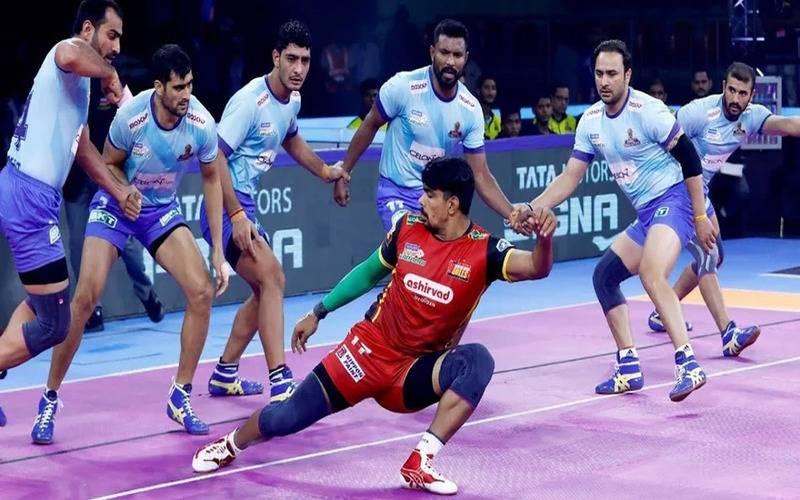
Kabaddi is a sport of split-second decisions. Whether it’s a raider evading a defender or a corner player anticipating a sudden dive, success often comes down to reaction time and reflexes.
A fraction of a second can make the difference between a successful raid and getting tackled.
This article explains how professional kabaddi players train their mind and body to react faster, improve reflexes, and gain a competitive edge.
Why Reaction Time Matters in Kabaddi
Reaction time is the speed at which a player perceives a stimulus and responds to it. In kabaddi, players face multiple stimuli every second like opponents’ movements, whistles, and changing game scenarios.
Raiders must react instantly to avoid tackles.
Defenders must respond to sudden jumps, feints, or direction changes.
Even the strongest player can fail without fast reflexes. Coaches often emphasize that reflexes are as important as strength because a slight delay can cost points or matches.
Mental Training for Faster Reactions
Professional kabaddi players know that reflexes are not just physical; the mind must be sharp too. Mental training includes:
1. Visualization
Players visualize different match scenarios before training or matches.
For example, a raider might imagine a left-corner defender attempting a tackle and practice reacting in his mind.
Studies show visualization helps improve decision-making speed, which translates to faster reactions on the mat.
2. Focus Drills
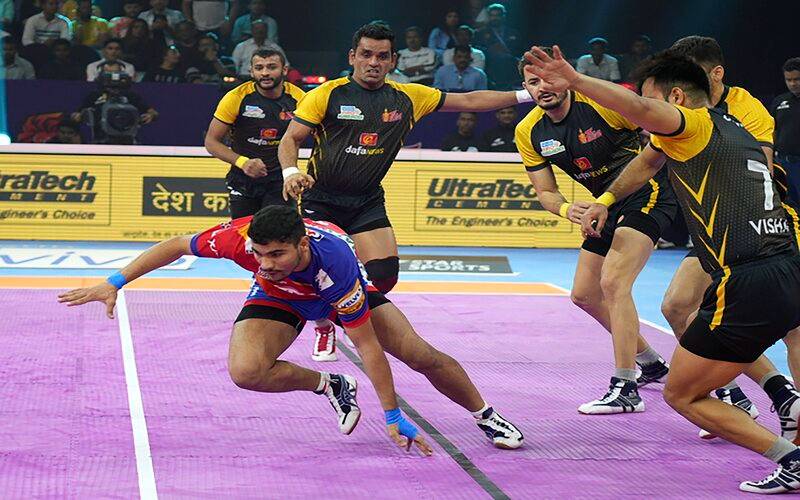
Concentration exercises train players to ignore distractions. During a game, the crowd, whistles, and team communication can be overwhelming.
Focus drills condition the brain to stay attentive, allowing players to react instantly to raiders or defenders.
3. Cognitive Exercises
Professional players use simple tools like reaction balls, apps, or even video analysis to improve split-second decision-making.
Tracking a fast-moving object, predicting opponent movements, or recognizing patterns enhances neural pathways, improving reflexes naturally.
Physical Training for Reflexes
Physical exercises complement mental training. Kabaddi requires explosive movements, agility, and balance all of which enhance reaction time.
1. Agility Drills
Players practice ladder drills, cone drills, and shuttle runs.
These exercises train the legs to respond quickly, improve footwork, and help players change direction in milliseconds.
A raider who can sidestep a defender by a fraction of a second gains an advantage.
2. Plyometric Training
Plyometrics jumps, hops, and explosive squats develop fast-twitch muscles.
Fast-twitch fibers react more quickly, making raiders faster and defenders more explosive.
This type of training allows players to move, jump, and lunge without hesitation.
3. Hand-Eye Coordination
Kabaddi requires precise hand and finger movements.
Raiders and defenders use grip exercises, catching drills, and rapid touch exercises to strengthen coordination.
This training ensures that hands and eyes work together instinctively during tackles and raids.
Reaction Drills in Real Match Scenarios
Professional players often simulate match scenarios to train reflexes:
Sudden Raids: Defenders face unexpected attacks to improve anticipation.
Rapid Touch Drills: Raiders practice touches while defenders attempt to catch them, forcing split-second decisions.
Multi-Player Tactics: Teams create chaos on purpose to help players adjust quickly.
These drills mimic high-pressure situations, helping players react under stress without hesitation.
Role of Experience
Experience enhances reflexes significantly. Watching opponents’ habits, understanding raiding patterns, and learning to read subtle cues allow players to react faster even without physical training.
Experienced defenders often anticipate a raider’s move just by observing their body language a skill developed over years of practice.
Nutrition and Recovery
A sharp mind requires proper nutrition. Kabaddi players eat high-protein, balanced diets with vitamins and minerals that support brain function and nerve health.
Hydration is also critical and even mild dehydration can slow reaction time.
Sleep and recovery matter equally. Players who sleep well react faster because their neural responses are optimized.
Many top kabaddi players consider recovery as important as training itself for maintaining sharp reflexes.
Equipment-Free Reaction Training
Not all reflex training needs a gym. Players often practice at home or in rural fields using simple tools:
- Reaction balls that bounce unpredictably
- Shadow drills against imaginary opponents
- Quick hand-touch games with teammates
These exercises develop reflexes while keeping players agile and flexible.
Examples from Pro Kabaddi League
Many PKL stars credit their fast reflexes for match-winning moments.
Raiders like Pardeep Narwal and defenders like Manjeet Chhillar rely on split-second decisions rather than brute strength.
Their reflexes, built through a mix of mental and physical training, allow them to predict opponent moves, avoid tackles, or execute perfect blocks.
Lessons for Young Players
For aspiring kabaddi players, focusing on reaction time early can give a competitive edge:
- Combine mental visualization with physical drills.
- Practice agility, plyometrics, and hand-eye coordination regularly.
- Simulate match situations to develop instinctive responses.
- Maintain proper nutrition, hydration, and sleep to support neural function.
- Observe experienced players to learn anticipatory skills.
Early focus on reflexes often translates into faster learning, better performance, and fewer injuries on the mat.
Conclusion
Kabaddi is as much a mental game as it is physical. Reaction time and reflexes often decide the winner in tight matches.
Professional players invest years in mental drills, physical exercises, and experience-based learning to sharpen their reflexes.
From visualization to agility drills, from hand-eye coordination to nutrition and sleep, every element plays a role in building lightning-fast responses.
Young players who prioritize these aspects develop a significant advantage over their peers.
In kabaddi, milliseconds matter. A raider who reacts faster or a defender who anticipates just one step ahead can change the game entirely.
That’s why improving reaction time and reflexes is not just training. It’s a key to becoming a champion.

“Rohit is a seasoned sports journalist with over 5 years of experience specializing in Indian sports. He has built a reputation for his deep-dive analysis of the Pro Kabaddi League (PKL) and domestic Indian Cricket. From tracking player auctions to breaking down match-winning strategies, Rohit provides fans with expert insights grounded in years of on-ground reporting and statistical analysis.